
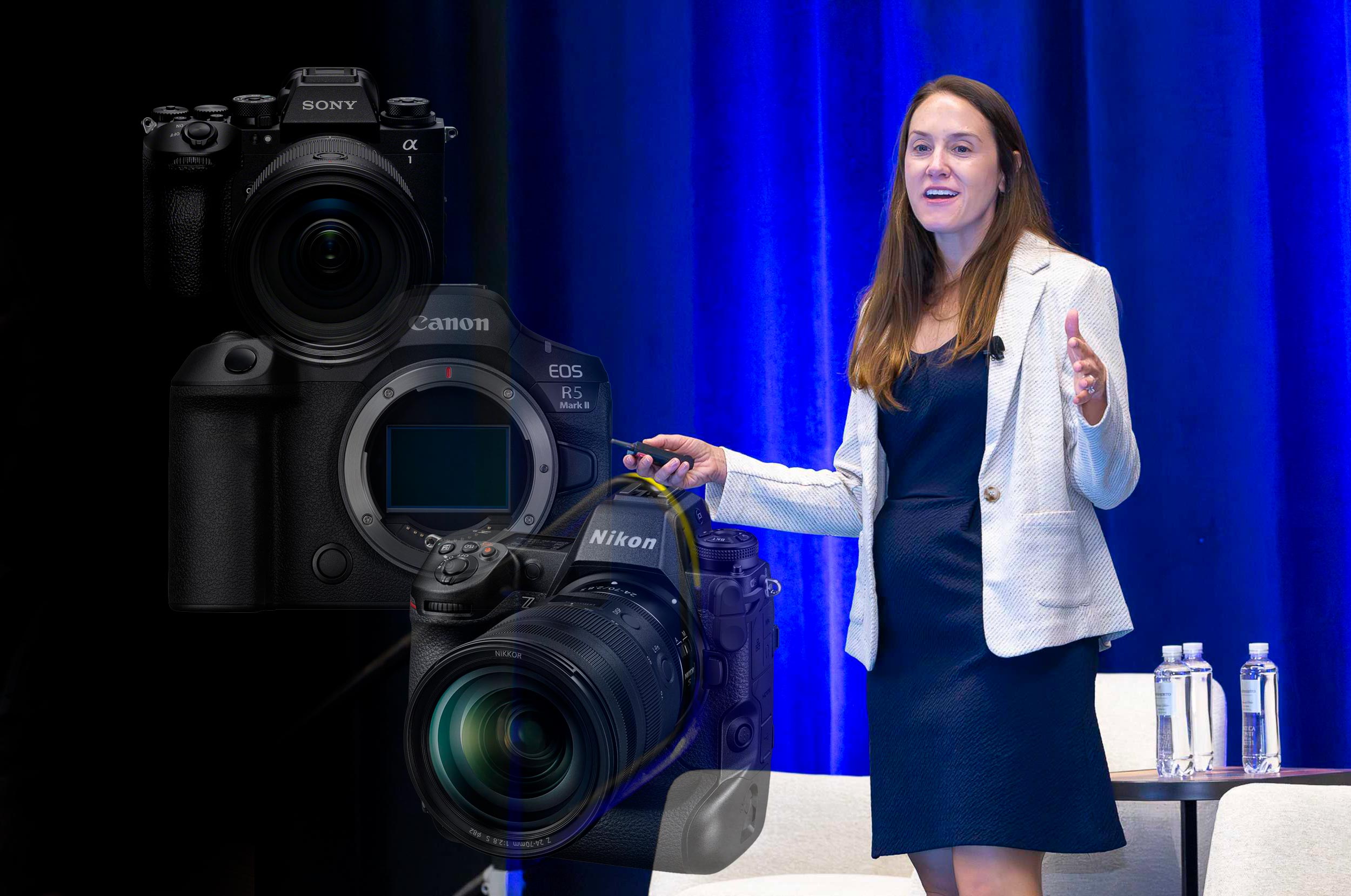
In a quiet ballroom, the loudest thing in the room should not be the camera. Corporate event photography depends on sharp event photos, but it also depends on how little the camera interrupts a keynote, panel, awards segment, executive announcement, or private corporate session. That is where the DSLR vs mirrorless debate becomes practical instead of ideological.
The short version: DSLR cameras can still make excellent files, and many working photographers built serious careers with them. But for modern event photography, the market now expects a quieter, lighter, less intrusive way of working. On that specific client requirement, mirrorless systems usually have the advantage.

The Complaint Is Not About Cameras. It Is About The Room.
Event managers rarely complain because they dislike a camera brand. They complain because the shutter sound becomes part of the event. A repeated DSLR click during a finance presentation, legal panel, leadership Q and A, charity speech, or investor update can pull attention away from the speaker. Some participants become visibly tense. Others glance toward the photographer instead of staying inside the moment. Video crews feel it too: a sharp shutter click can bleed into camera microphones and damage the natural room tone they need for clean edits.
That is a real production problem for an event photographer. Corporate event photography is close to photojournalism: the job is to record what happened without changing how people behave. When the camera announces every frame, the photographer is no longer invisible. The best corporate event photographer is often the one whose presence is felt in the final gallery, not during the meeting.
The Systems, Not Just Two Bodies
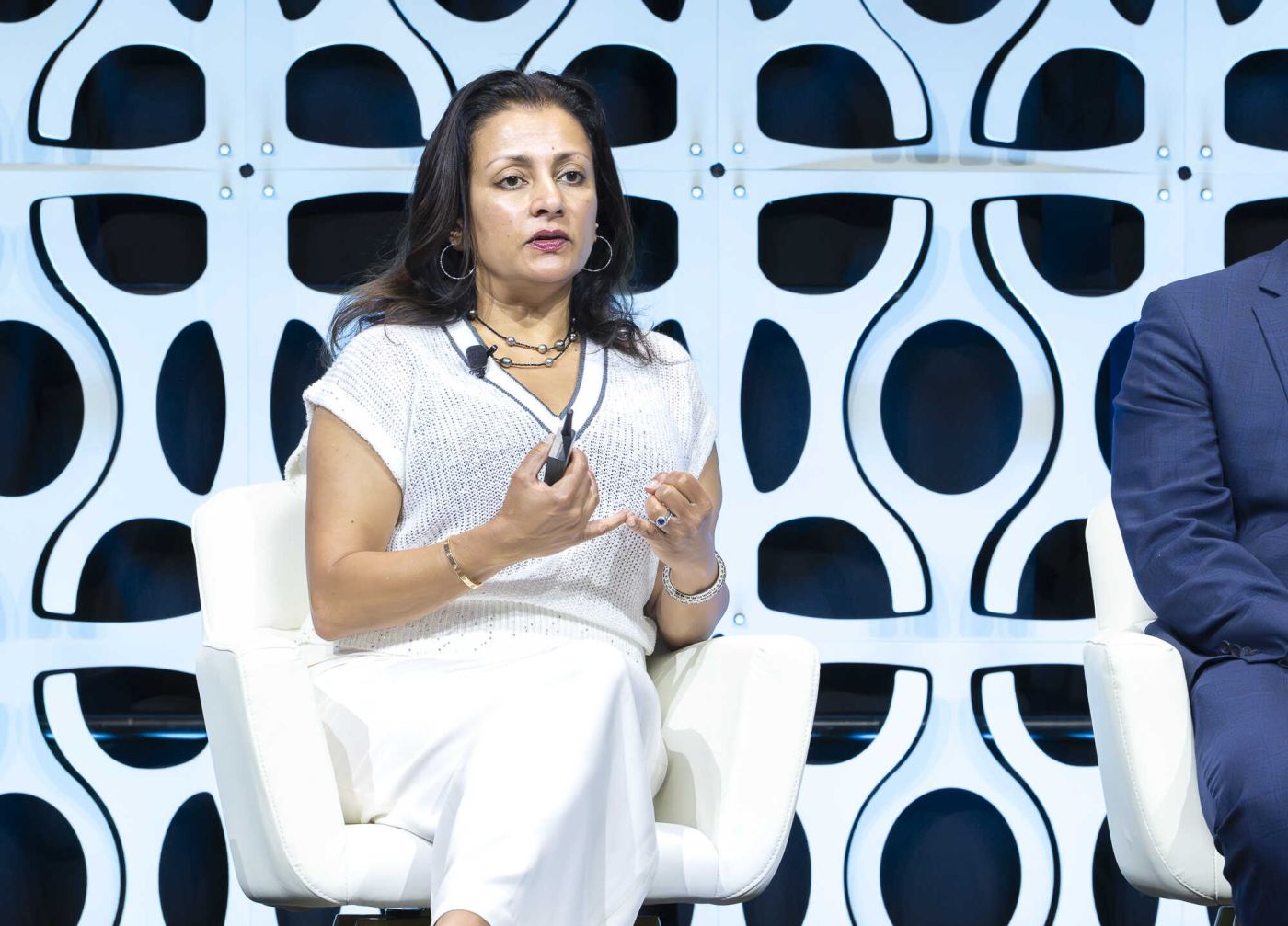
The Canon EOS-1D X Mark III and Canon EOS R5 Mark II are useful examples, but they are only examples. This article is really about two different system philosophies: a DSLR system built around a mirror, optical viewfinder, and mechanical actions, and a mirrorless system built around a direct sensor view, electronic viewfinder, and electronic shutter options.
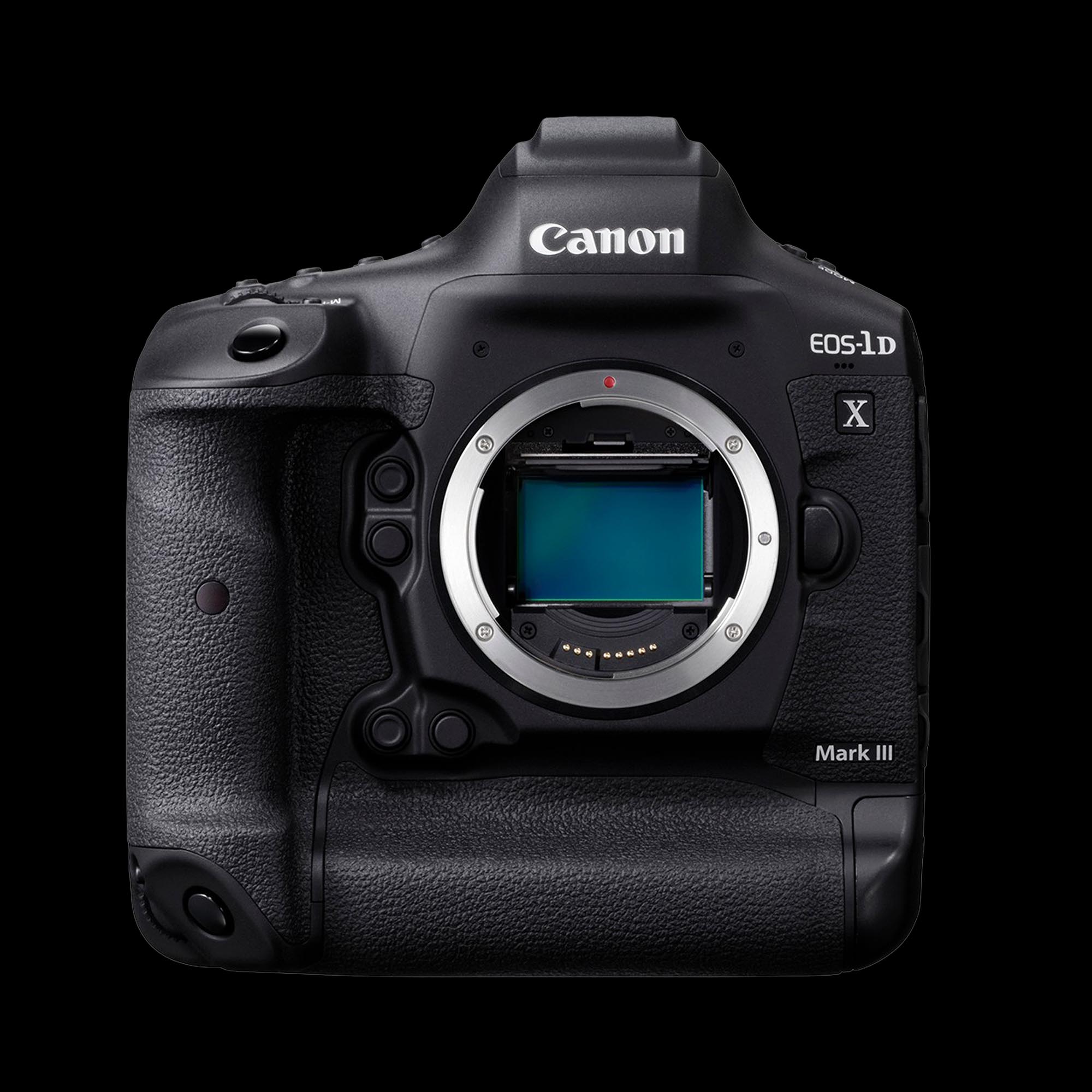
Canon's official EOS-1D X Mark III specifications describe an eye-level SLR viewfinder with a pentaprism, a quick-return half mirror, and a vertical-travel mechanical focal-plane shutter. The same specs also show that the camera can use electronic shutter operation in Live View, including a silent shooting mode. That matters, because it keeps the DSLR comparison honest. High-end DSLRs are not primitive. They have workarounds.
The practical difference is how naturally those workarounds fit the job. At a corporate event, photographers are moving between the stage, audience reactions, networking, sponsor details, and executive portraits. A mirrorless body such as the Canon EOS R5 Mark II is designed around the electronic view and shutter modes from the start. Canon lists it as a digital interchangeable lens mirrorless camera with a Canon RF mount, a full-frame stacked sensor, and an electronic shutter mode where a shutter release sound is not generated. Other small sounds from aperture or focusing can remain, but the main mechanical shutter report can disappear.
What DSLR Still Does Well
A fair comparison should not pretend that DSLR cameras suddenly stopped working. Professional DSLR bodies are rugged. Optical viewfinders have no display lag and do not consume power in the same way an EVF does. Many photographers still like the tactile handling, battery rhythm, and mature lens ecosystems. A DSLR can be a very dependable tool for reception coverage, step-and-repeat portraits, outdoor ceremonies, venue details, and moments where sound is not sensitive.
The Canon EOS-1D X Mark III is a good example of that old professional strength. It has a full-frame sensor, deep ergonomics, fast drive modes, and the kind of body design made for demanding assignments. If the assignment is noisy, physical, and action-heavy, a DSLR can still deliver polished event photos.
The problem is not image quality. The problem is the room. In corporate event photography, many of the most important moments happen in low-noise environments: executive remarks, investor updates, board-adjacent sessions, awards, panel moderation, luxury brand dinners, and short ceremonial moments where everyone is listening. In those rooms, a mechanical shutter can become a visible and audible interruption.

What Mirrorless Changes
Mirrorless changes the default behavior. Because there is no mirror to flip up, the camera does not have to begin each exposure with the same mechanical sequence. Many mirrorless cameras offer electronic shutter modes that can be silent or nearly silent, depending on the body and settings. Canon's own shutter-mode guidance points photographers toward electronic shutter when quiet or silent shooting is needed, while also warning them to test for banding under flickering LED or fluorescent light.
For an event manager, that is the important shift. The photographer can cover applause, reactions, a CEO on stage, a panelist making a point, or a quiet handshake without sending a hard click through the room every time. For event photojournalism, this matters because the best frames often come from patience and repetition. The less audible each frame is, the less the room reacts to being photographed.
Weight matters after hour six. For multi-hour corporate assignments, camera weight is not a cosmetic specification; it affects speed, stamina, posture, and how consistently a photographer can react late in the event. Canon lists the EOS-1D X Mark III at approx. 1440 g with battery and memory card. Canon lists the EOS R5 Mark II at approx. 670 g with battery and memory card. Lenses and accessories change the full kit, but body weight still matters after six, eight, or ten hours. A lighter mirrorless body makes it easier to move, react, shoot over a long reception, and keep the photographer fresh enough to notice small moments late in the day.

The Honest Part: Mirrorless Is Not Magic
Mirrorless is better suited to the modern corporate market, but it is not magic. Electronic shutter can create rolling-shutter distortion with fast movement on some cameras. Flickering LED walls, fluorescent fixtures, projection systems, and stage lighting can cause banding or uneven exposure. Flash behavior also varies by model and mode. A professional event photographer should test the room, know the body, and switch shutter modes when the conditions demand it.
There are other workflow trade-offs. EVFs use power. High-resolution mirrorless bodies create large files. Some mirrorless systems invite very high frame rates, which can slow culling if the photographer lacks discipline. Silent shooting also requires etiquette: total silence can make it harder for the photographer to confirm rhythm, so visual indicators and good muscle memory matter.
Still, these caveats are manageable. They are technical decisions inside the photographer's control. A loud mechanical shutter in a silent room is different. It is a client-facing disturbance.

Other Top Mirrorless Bodies Worth Knowing
The larger market is moving in the same direction. The models below are not included to say that every event photographer needs one specific flagship. They show how major brands are investing in professional mirrorless bodies for fast, quiet, highly responsive work.
Canon EOS R1
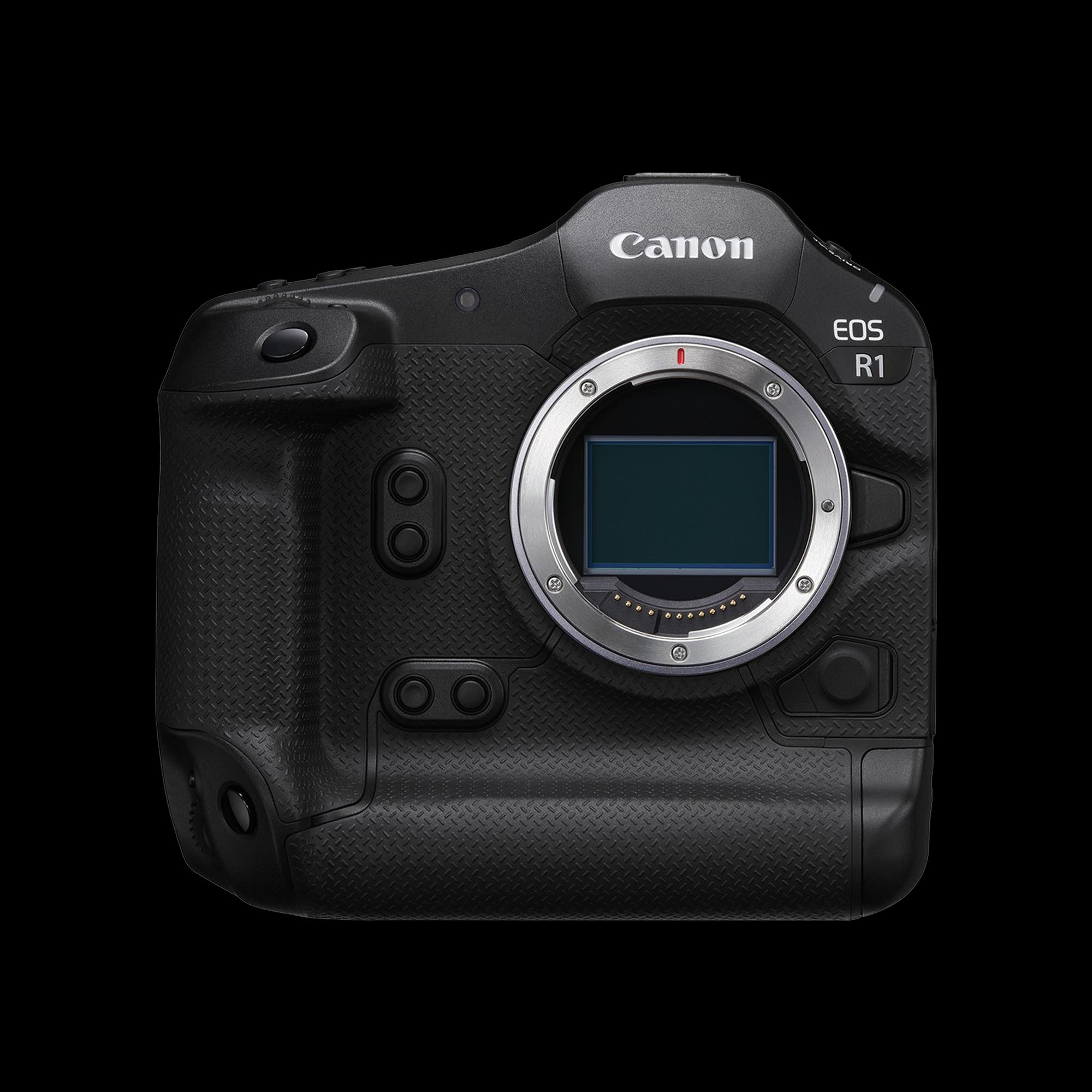
Canon lists the EOS R1 as a high-end RF mirrorless body with a 24.2 megapixel stacked full-frame sensor, electronic shutter shooting up to 40 fps, and an electronic shutter mode where no shutter release sound is generated. It is a clear sign that Canon's professional event and photojournalism direction now lives in mirrorless.
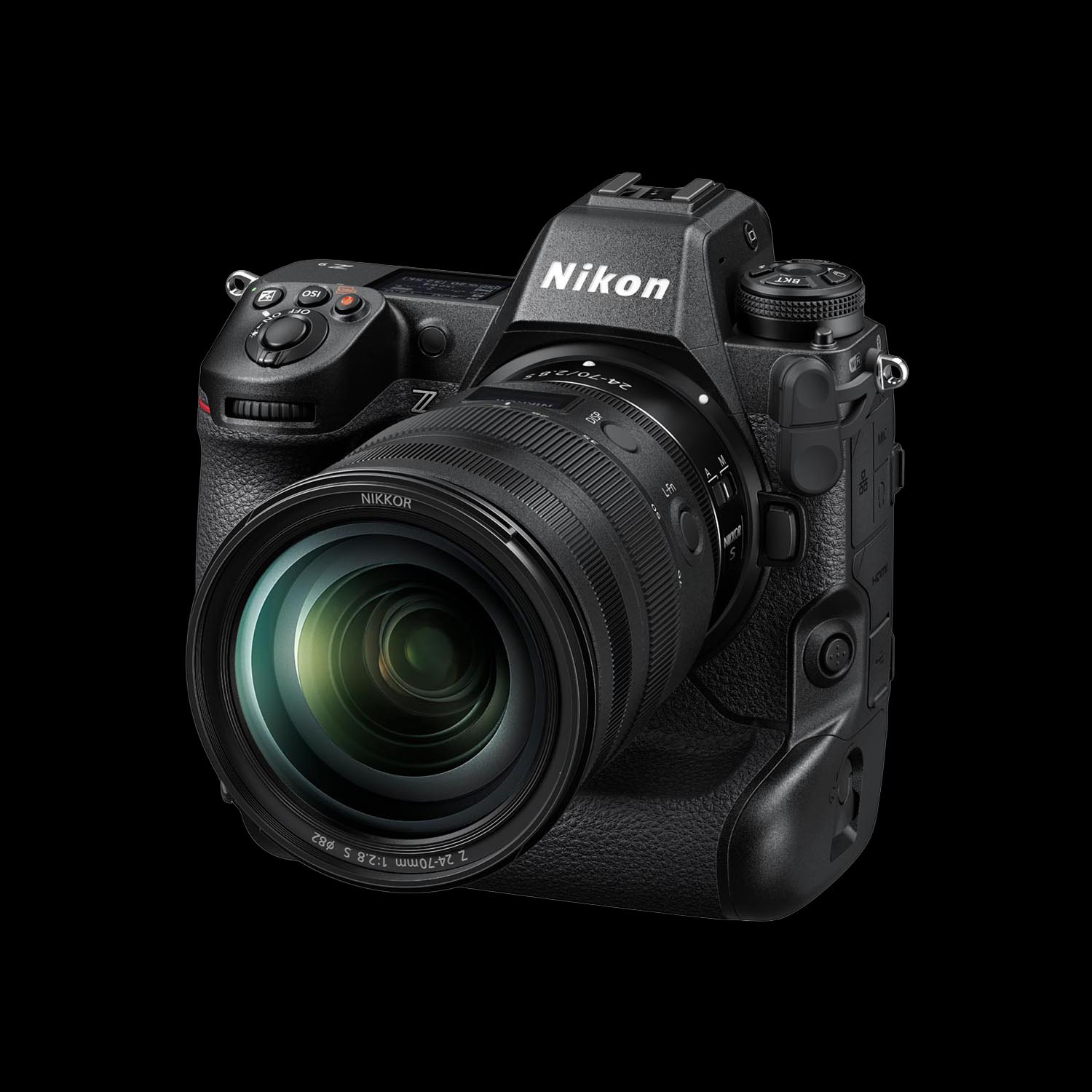
Nikon Z9
Nikon lists the Z9 as a full-frame Z mount mirrorless camera with 45.7 million effective pixels and an electronic shutter with shutter sound and sensor shield. Nikon also describes a design without need for a mechanical shutter. For event photography, that is exactly the philosophical shift: the top professional body no longer has to revolve around mechanical shutter sound.
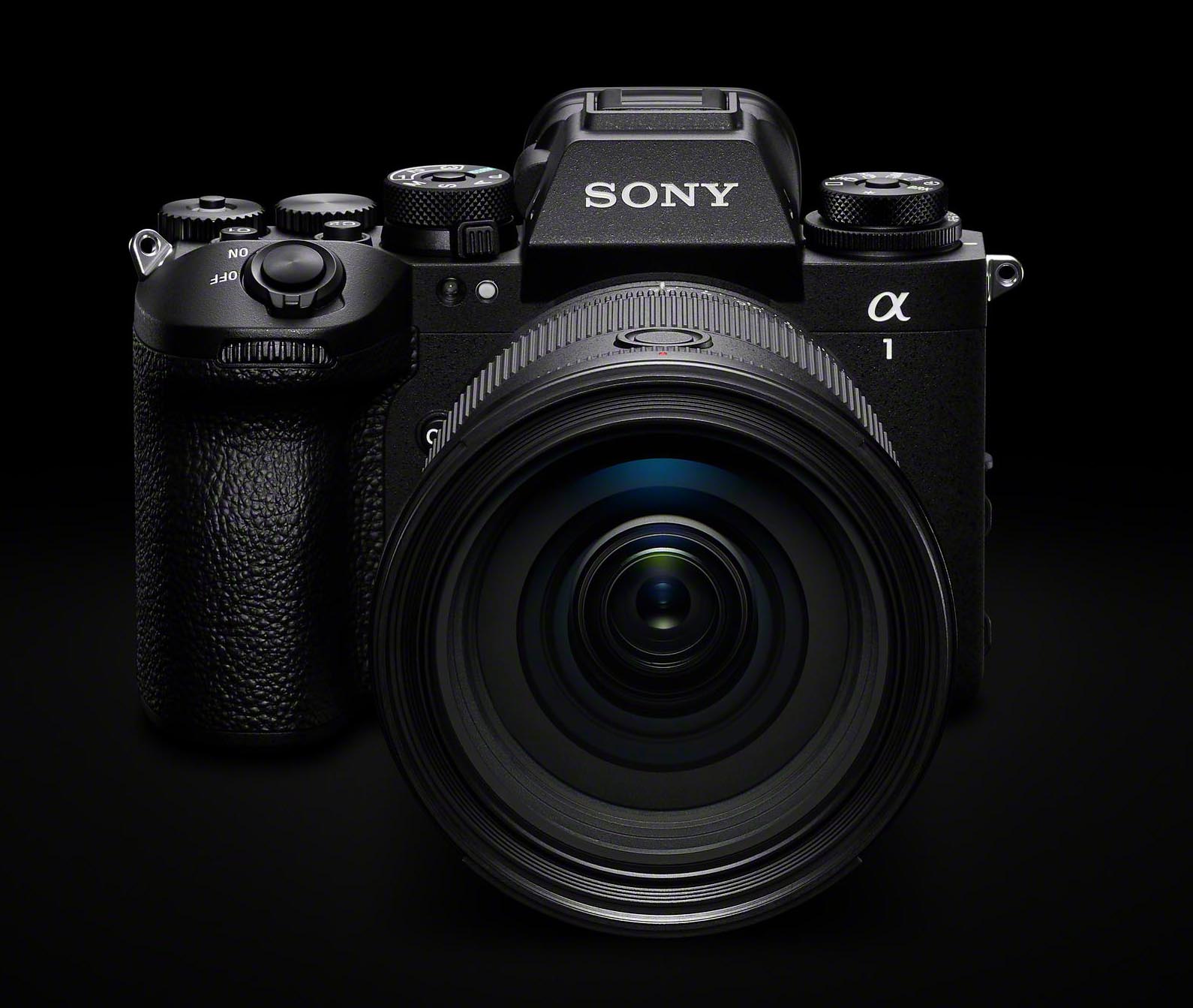
Sony Alpha 1 II
Sony lists the Alpha 1 II with approx. 50.1 megapixels for still images, mechanical and electronic shutter options, electronic shutter speeds to 1/32000 s, and approx. 30 fps electronic-shutter drive. It is a high-resolution mirrorless example for photographers who need both detail and speed.
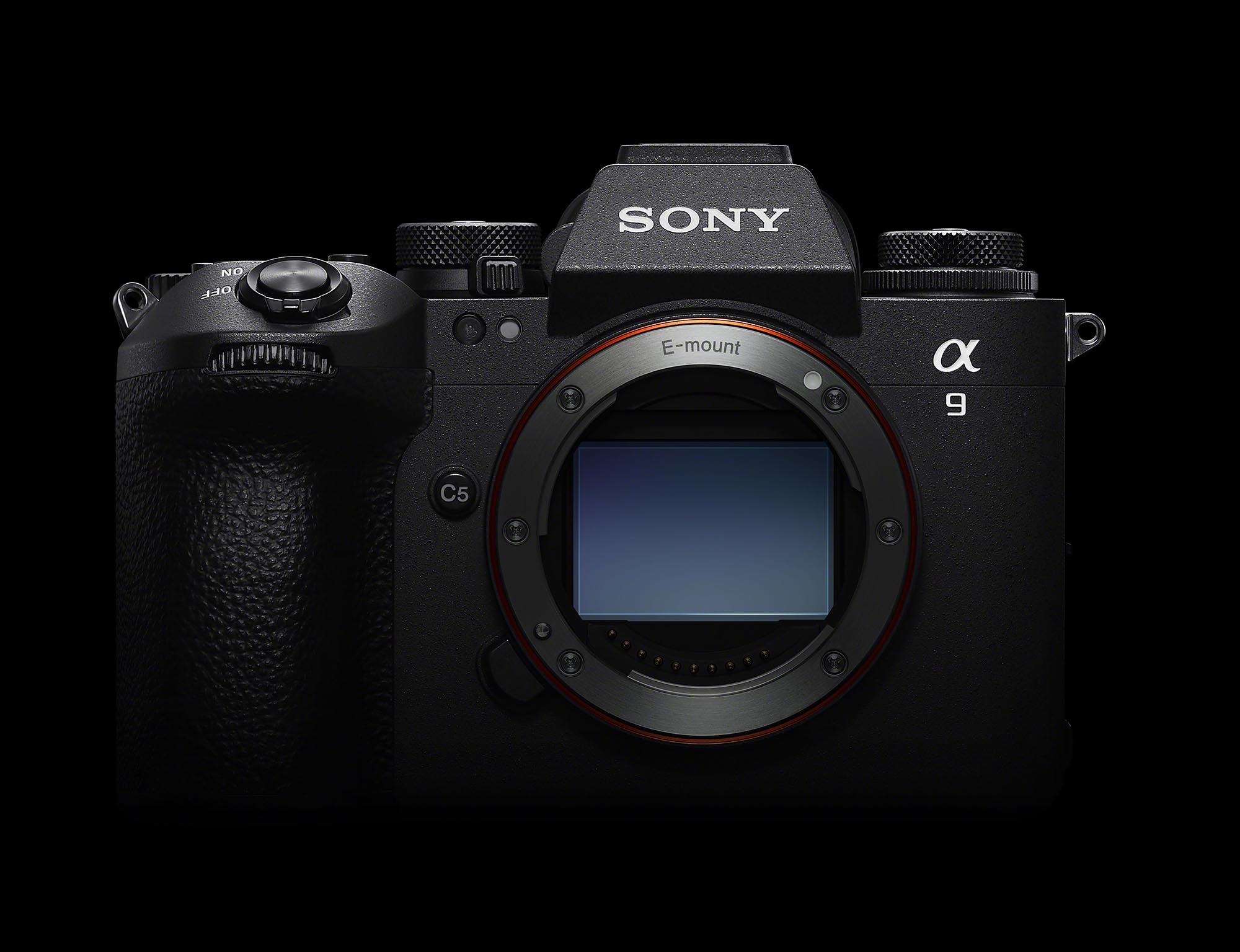
Sony Alpha 9 III
Sony lists the Alpha 9 III with approx. 24.6 megapixels for still images, an electronic shutter, shutter speeds to 1/80000 s, and approx. 120 fps drive. Sony Group also describes the Alpha 9 III as a full-frame mirrorless camera equipped with a global shutter full-frame image sensor, a system designed to address rolling-shutter and flicker-related problems that matter in professional rooms.

Practical Recommendation
For event managers, the camera question should be simple: ask the photographer how they handle quiet coverage. Ask whether they can work silently during speeches, whether they test LED lighting, and whether they know when to use mechanical, electronic first-curtain, or electronic shutter. The answer matters more than brand loyalty.
For photographers, the conclusion is equally practical. DSLR bodies can still make beautiful event photos, and they remain useful in some assignments. But if the job is modern corporate event photography, the brief is no longer just "get the shot." It is "get the shot without changing the room." That is why mirrorless systems better answer the expectations of today's event photography market.
The winning camera is not the one that sounds powerful. It is the one the client does not hear.